Satellite Dependence: Ukraine Charts a Path Beyond Starlink
Ukraine and European allies are urgently seeking alternatives to Starlink due to recent service disruptions and political concerns surrounding Elon Musk’s network.
By Arjun Patel ·
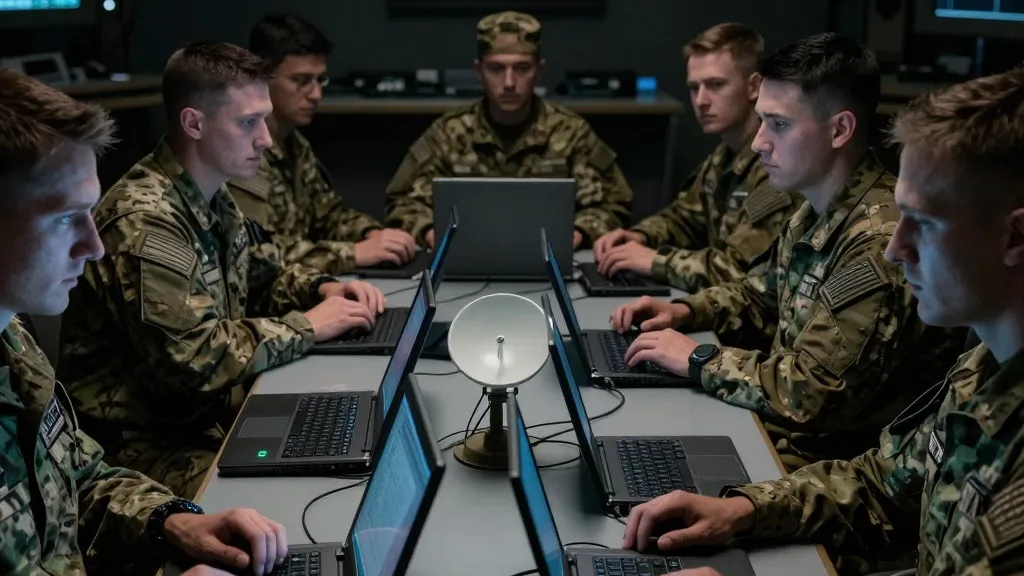
Ukraine is actively working to establish communication channels independent of Elon Musk's Starlink network. Recent disruptions to service, combined with growing concerns over the network's reliability, have forced Kyiv and its European partners to urgently address the risks of relying on a single, politically sensitive satellite provider.
For years, Starlink has been a cornerstone of Ukraine's resistance against Russia's full-scale invasion. As the world's largest communications satellite network, it has provided high-speed internet and data to any user with a compact terminal. This capability has been essential for maintaining both civilian communications and military operations, and it has significantly expanded the Ukrainian military's ability to remotely guide and control drones for both air defense and offensive strikes.
However, the service has become increasingly unreliable due to political factors and has experienced sudden disruptions in Ukraine. These issues have prompted serious questions about how to move forward without it, as the network's role in the conflict is deeply intertwined with its owner's political inclinations. The stability of Ukraine's military communications now hangs in the balance.
The reliance on Starlink has been a collaborative effort. The United States, along with European nations including Poland and Germany, have paid SpaceX for tens of thousands of commercial Starlink terminals and covered subscription fees to send them to Ukraine. The U.S. government has also provided the Ukrainian military with access to Starshield, a military-grade version of the Starlink system.
The military-grade Starshield service is also available for Ukrainian defense companies to test in their technologies in cooperation with the military, according to a representative from BlueBird Tech. This access to advanced satellite capabilities is part of the broader support system that has underpinned Ukraine's military operations.
Despite the challenges, the system's technical advantages are widely acknowledged. The head of hardware R&D at the Ukrainian defense company BlueBird Tech, who spoke on condition of anonymity for security reasons, noted that “Starlink currently offers some of the best satellite coverage available, with virtually no competitors when you consider the combination of cost, availability, and ease of use.” He added that “in practical terms, the main limitation is the need to position the antenna so it can receive signals from the satellites.”
The current situation has created an urgent need to address the security and reliability of Ukraine's communications infrastructure. The focus now is on finding ways to move forward without depending on Starlink, a question facing both Ukraine and Europe as a whole. The search for alternatives is a direct response to the network's recent disruptions and the political uncertainty surrounding its operation.
The ongoing search for alternatives to Starlink represents a significant shift in Ukraine's approach to its communications strategy. The country's ability to maintain its resistance is directly tied to the availability of reliable and secure communication channels, and the current situation has highlighted the vulnerabilities of its current setup. The path forward remains a critical issue for Ukraine and its allies.
Source: Ars Technica