5,500 PSI: Tesla Reveals Roadster's Fighter-Jet-Inspired Cockpit Interface
A new video showcases the next-generation Roadster's digital dashboard, highlighting its track-focused telemetry and the pressure gauge for its cold gas thruster system.
By Thabo Mokoena ·
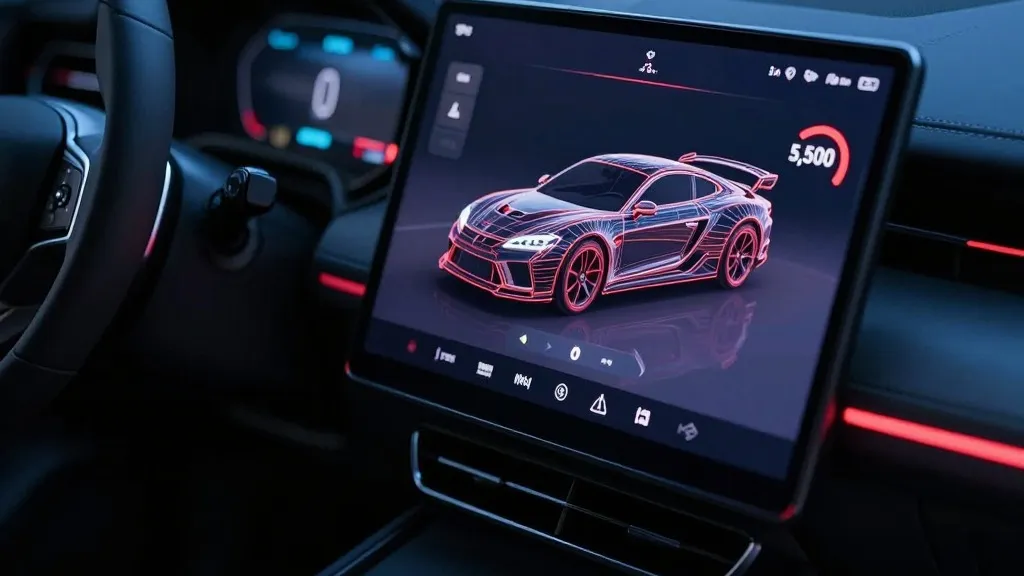
Tesla has released a 34-second video offering the most detailed glimpse yet into the interior controls of its upcoming next-generation Roadster. Posted to the company’s X account on Friday, October 23, the clip provides a walkthrough of the vehicle’s primary touchscreen, which Tesla describes as being designed around the pilot and inspired by fighter jet cockpits. The footage serves as a significant update for prospective buyers, moving beyond exterior renders to define the digital experience awaiting future owners.
The interface prioritizes the vehicle model over a traditional map-centric layout. The home screen features a 3D wireframe of the car positioned next to its squared-off yoke. Interacting with this model reveals controls for the rear wing, allowing drivers to select between low drag and high downforce configurations. Standard utility tabs for Home, Vehicle, Listen, Climate, and Navigate line the bottom of the display, alongside a charging page that includes a charge limit bar and a compact music player. This arrangement marks a distinct departure from the current Tesla lineup, where the main screen is typically dominated by navigation maps.
The bulk of the demonstration focuses on Track Mode, a suite of data tailored for high-performance driving. The dashboard presents a live circuit map, session lap times, and real-time monitoring of brake and motor temperatures. Detailed readouts for tire pressure and temperature are also visible. A dedicated setup page allows drivers to toggle between Auto, Low Drag, High Downforce, or Custom aero modes, while also adjusting aero and brake balance. Stability and traction controls can be switched off entirely for maximum performance.
A key feature of this interface is the direct link to the vehicle’s propulsion hardware. A status bar at the bottom of the Track Mode screen displays a gauge reading “Thruster · 5,500 PSI” adjacent to a “Boost Ready” indicator. This software element corresponds to the cold gas thrusters fed by carbon-overwrapped pressure vessels, hardware that Tesla showcased near Waco, Texas, on October 15. The Thrust and Rocket versions of the car utilize this system to achieve 0-to-60 mph times of under 0.9 seconds and under 0.59 seconds, respectively, while the base Performance model relies on a fan and ground sealing system for grip.
Despite the specific details shown, the interface remains subject to change before mass production begins. Tesla’s official Roadster page indicates that the vehicle will feature two smaller forward displays in addition to the central touchscreen. The company has not yet confirmed whether the detailed telemetry seen in Track Mode will be backported to other models, such as the Model 3 Performance. Elon Musk previously stated that production of the Roadster is scheduled to commence in 2028.
Availability for the different trims varies significantly. The Rocket version is designated as invite-only and is not yet approved for public road use, while the Thrust model is listed as a limited release. Reservations for the vehicle are currently open with a deposit of $50,000. For those eager to examine the car’s physical design, the first public viewing opportunity will occur this weekend, with the vehicle on display in the lobby of the Petersen Automotive Museum in Los Angeles from October 24 through October 27.
This exhibition marks the first time the general public will have the chance to view the new Roadster up close, following months of anticipation and detailed technical breakdowns of its three distinct configurations.
Source: Teslarati