Musk pledges accelerated equipment for Texas chip megaproject
Tesla and SpaceX chief Elon Musk announced that key suppliers are speeding up deliveries to support a 2028 production target for the Terafab facility.
By Khalid Rahman ·
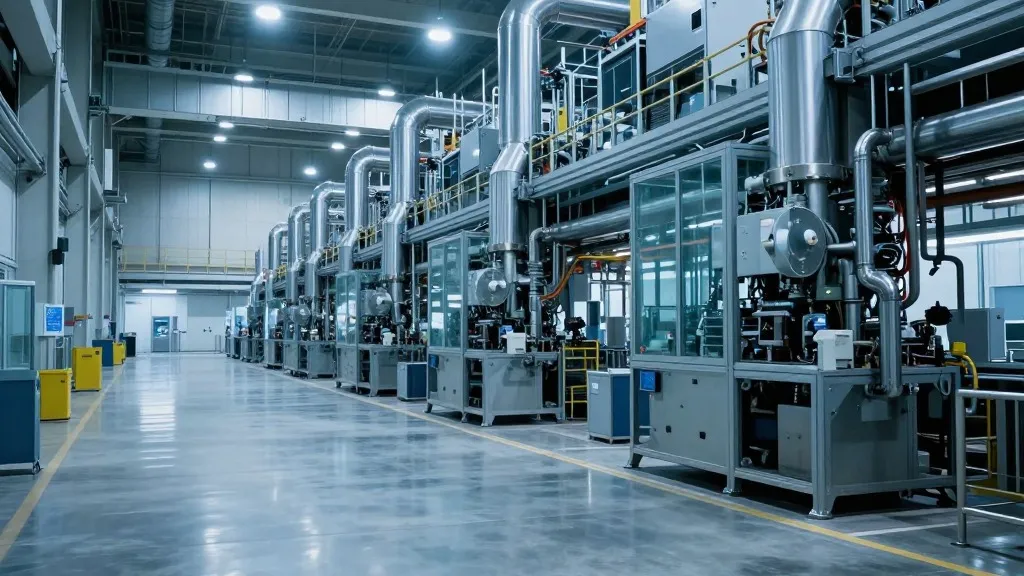
The semiconductor industry is witnessing a significant acceleration in logistics as major manufacturers prioritize a new joint venture led by Elon Musk. During a live broadcast of SpaceX’s third-quarter 2026 earnings call on X on October 20, Musk confirmed that critical equipment providers are moving materials faster than originally scheduled to meet the project’s ambitious milestones.
The Terafab facility, a collaborative effort between Tesla and SpaceX, aims to begin volume chip production at its primary site in Gibbons Creek, Texas, by the third or fourth quarter of 2028. Musk described this schedule as "highly aspirational" and noted that the timeline carries "big error bars." He stated that the company is "very appreciative" of suppliers for accelerating deliveries to help achieve these aggressive dates.
Musk, who serves as the chief executive officer for both parent companies, detailed the project’s structure and goals. The facility is designed to be a vertically integrated plant capable of manufacturing one terawatt of AI computing power annually. It will handle logic, memory, and advanced packaging architectures in a single location. The first experimental test chip is expected to be produced at SpaceX’s research fabrication facility in Austin, Texas, around the second quarter of 2027.
The project relies heavily on external partners to supply its massive infrastructure needs. ASML, the world’s sole commercial supplier of extreme ultraviolet lithography systems, is identified as a critical partner. Each of these systems costs approximately $400 million and is required for leading-edge production. Unofficial sources previously indicated that the first EUV tool was slated for delivery in mid-2027, though it is unclear if this represents the expedited timeline Musk referenced.
Intel joined the venture in April 2026 to co-develop and refactor silicon fabrication technology, providing access to its 14A manufacturing node. The facility will utilize traditional EUV lithography systems based on this process. Other key suppliers include American firms Applied Materials, Lam Research, and KLA Corporation, along with Japan’s Tokyo Electron, which will provide front-end processing and metrology machinery.
Musk also revealed that Tesla and SpaceX are in discussions with roughly 10 South Korean equipment manufacturers. These include Hanmi Semiconductor, known for advanced packaging, and HPSP, a maker of high-pressure hydrogen annealing equipment. These firms will also supply specialized piping components and process valves to support the facility’s operations.
The strategic goal of Terafab is to mitigate future shortfalls in cutting-edge AI processors currently sourced from external foundries like TSMC. The chips produced will power Musk’s xAI clusters, self-driving vehicles, Optimus humanoid robots, and SpaceX’s orbital AI data center. Musk suggested that once fully operational, the commercial value of the output would be significant enough to place the facility within the top 20 global country GDPs, a tier currently anchored by Switzerland at approximately $1.14 trillion.
Despite the aggressive procurement plans, experts have raised questions about the feasibility of the one-terawatt target. Research firm Gartner estimates that total global AI-optimized data center capacity is roughly 44 gigawatts as of late 2026. This figure represents only 4.4% of Terafab’s planned annual output, highlighting the scale of the challenge ahead for the project.
Source: Tom's Hardware